Ask a youth pastor whether summer camp was “good,” and the first answer may be about the speaker, schedule, or weather. Ask what still mattered after the buses went home, and the answer usually becomes more specific.
Leaders remember the conversation a student finally started. They remember a group that felt less divided. They remember teaching that gave them language for the next Wednesday night. They also remember whether the camp team helped them stay focused on students instead of logistics.
That is the clearest lesson in BigStuf’s 2026 post-camp surveys: youth group summer camp has the most value when the experience continues to serve the ministry after the event ends.
What the 2026 survey responses showed
BigStuf received 71 post-camp survey responses across three 2026 camp weeks. The response-weighted overall experience rating was 4.52 out of 5.
One result stood out even more. Among the 69 church-group leaders who answered whether the content applied to their students, all 69 said yes.
These findings describe the leaders who completed BigStuf’s 2026 surveys. They are not a scientific survey of every attendee or every Christian summer camp. They do reveal a consistent pattern in what youth leaders valued.
- Teaching that connected with life back home
- Worship that created room for an honest response
- Small-group conversations that continued after sessions
- Shared experiences that helped students connect
- Accessible speakers, worship leaders, and camp staff
- Support that allowed adult leaders to stay present with students
Relevant teaching gives leaders something to carry home
A memorable message can hold a student’s attention for an hour. Useful teaching gives the church something to work with for months.
One Camp 1 respondent described the week this way:
“Everything that was taught had an application focus for ‘back home.’ It led to some very good small group conversations.”
Youth pastors are not choosing a standalone event. They are choosing an experience that will become part of an ongoing ministry. The best Christian youth camp content does not compete with the local church. It gives local leaders language they can revisit with students, parents, and volunteers.
Church teams comparing camp options should ask how teaching connects to discussion. A strong answer should explain more than the theme. It should show how students will process ideas with trusted adults and how the church can continue those conversations after camp.
Worship and small groups work best together
Worship was one of the strongest themes across the 2026 feedback. Its value did not stop when the music ended. Respondents repeatedly connected worship and teaching with meaningful discussion.
One leader wrote that the talks “led to truly significant small group discussions.” Another praised the intentional space that allowed students and leaders to respond instead of rushing to the next program element.
This is one reason a youth group summer camp can create different conversations than a normal weekly meeting. Students and leaders share the session, the walk back, the meal, and the small group. The experience gives a question more time to become honest.
For a closer look at that part of camp, visit BigStuf’s worship experience.
Friendship may be the first visible result
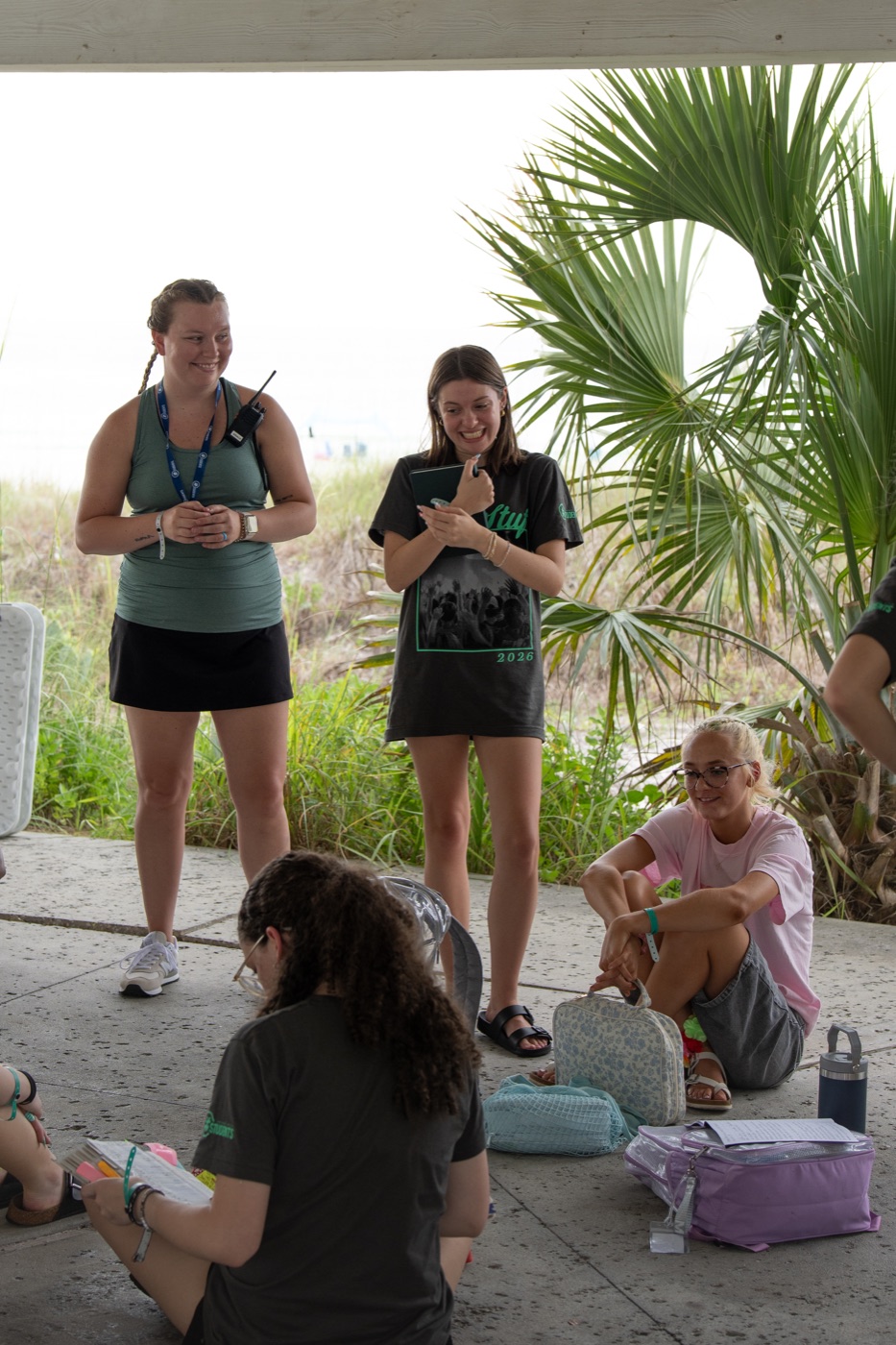
Adults sometimes look for dramatic proof that camp mattered. Students may show the result in a quieter way. They return knowing more names. They sit with a different group. They have a shared memory that makes the next youth gathering feel less intimidating.
A Camp 3 respondent described a division between middle-school and high-school students before camp, then wrote that the camp team helped them “all see that we’re all a team.”
That does not mean every recreation format works for every student. The 2026 feedback included mixed views about competitive activities, and churches should consider how a program welcomes students with different interests and needs. The broader lesson is more durable: shared identity can help a youth group move beyond familiar circles.
Accessible adults make a large event feel human
Students do not only watch what happens on stage. They watch whether the people leading the experience appear approachable and real.
One Camp 2 respondent valued that the worship team and speakers “made themselves so accessible and so human” and that students could interact with them.
That kind of accessibility builds trust. When speakers and worship leaders remain present and approachable, students see that the people on stage are part of the camp community. That can make honest questions feel more possible.
The same principle applies to the church’s own volunteers. A schedule can tell students where to be. A trusted leader helps them feel safe enough to participate. BigStuf’s Leader Labs are designed to support the adults carrying that responsibility.
Leader support changes what adults can notice
Youth pastors arrive at camp tracking rooms, transportation, group communication, behavior expectations, and the emotional temperature of their students.
When the camp handles its part clearly, church leaders gain attention they can give back to students. They can notice who is sitting alone, who needs a conversation, and who is ready to take a step toward the group.
One respondent thanked BigStuf leadership for helping their team navigate a difficult season while remaining available to students. Another leader, reflecting on decades in student ministry and several years at BigStuf, praised the organization’s heart, quality, and leaders.
When a church compares Christian summer camps, leader support deserves the same attention as programming. Ask who answers questions before arrival, what help is available on site, and which logistics remain the church’s responsibility.
The real test begins after the bus ride home
A strong week can create momentum. The local church decides what happens next.
- Which questions from camp will return in youth group?
- Who will follow up with first-time students?
- How will leaders involve parents without sharing private conversations?
- What will help new friendships continue?
- Which students may need additional pastoral care?
- How will volunteers debrief what they noticed?
The youth group summer camp planning timeline can help churches build these decisions into the process instead of treating follow-up as an afterthought.
Questions to ask when evaluating Christian summer camp
- Will the teaching connect with students’ lives? Ask how messages become small-group discussion and ministry application.
- Does worship create room to participate and respond? Look beyond production quality to the way students and leaders experience the room.
- Will different students have ways to belong? Consider recreation, free time, group structure, and support for first-time campers.
- Can adult leaders remain present? Clarify logistics, communication, lodging, and on-site support.
- What can the church carry home? Choose an experience that strengthens the ministry rather than replacing it.
What youth leaders valued most
The survey responses do not reduce camp to a score. They show why the score matters.
Leaders valued worship with room to respond, teaching with a back-home application, conversations that became more honest, students who felt more connected, and support that helped adults lead well.
Those are useful standards for any church choosing a Christian summer camp. They also explain why the most meaningful part of camp may not be the moment everyone photographs. It may be the conversation that becomes possible afterward.
Explore the BigStuf SMMR experience, review planning information in the Help Center, or use the youth group camp comparison worksheet with your ministry team.